
FDA Regulatory Update
Compounded Semaglutide Ban: Full FDA Timeline and What It Means in 2026
The compounded semaglutide ban is not a single law that switched on overnight. It is a sequence of FDA enforcement deadlines that began when the agency removed semaglutide from its drug shortage list in February 2025. Two pharmacy types, two deadlines, and a fresh April 30, 2026 proposal that could close the door even further.
This page lays out the full chronology, distinguishes 503A from 503B pharmacies in plain language, and tells current patients what to ask their prescriber today. Part of the complete semaglutide guide.
Key Takeaways
- The compounded semaglutide ban is enforcement of existing law, not a brand-new prohibition. The shift began when the FDA removed semaglutide from the shortage list in February 2025.
- Two enforcement dates apply: April 22, 2025 for 503A state-licensed pharmacies and May 22, 2025 for 503B outsourcing facilities.
- On April 30, 2026, the FDA proposed removing semaglutide, tirzepatide, and liraglutide from the 503B bulks list. The public comment period runs through the end of June 2026. This is the freshest piece of the picture.
- Compounding for documented patient-specific needs or for combination formulas (such as semaglutide with B12) may still be legal under 503A pathways, depending on the pharmacy and the state.
- If you are currently on compounded semaglutide, ask your pharmacy directly: "What is the legal basis for this prescription today?"
Feb 2025
Shortage list removal
Apr 30 2026
503B bulks-list proposal
What the Compounded Semaglutide Ban Actually Is (and What It Is Not)
If you are on an active compounded semaglutide prescription and want to know whether you are about to lose access, the short version is this: the ban is not a new law. It is the FDA exercising enforcement authority that has always existed under Section 503A and Section 503B of the Federal Food, Drug, and Cosmetic Act. Those sections let pharmacies compound a drug while it is on the FDA shortage list. Once a drug comes off the list, the legal basis for copy-compounding goes away.
Semaglutide sat on the shortage list from 2022 through early 2025 because Novo Nordisk could not keep up with Ozempic and Wegovy demand. During that window, compounding pharmacies legally produced semaglutide at $99 to $500 a month, compared with roughly $900 to $1,865 a month for the brand-name versions without insurance (Ozempic: $900 to $1,000; Wegovy: $1,350 to $1,865, prices as of 2025). Once the FDA declared the shortage resolved, that window started closing.
Why Compounding Was Allowed in the First Place
Federal law gives compounding pharmacies a narrow lane to produce a drug that is otherwise commercially available. The two main pathways are 503A (traditional state-licensed pharmacies, prescription-by-prescription) and 503B (FDA-registered outsourcing facilities, larger batches). Both pathways allow copy-compounding only under specific conditions. A drug being on the FDA shortage list is the most common condition. When semaglutide hit the list in 2022, compounders were permitted to fill the gap. That permission was always tied to the shortage status, not to a permanent right.
What Changed When the Shortage Was Declared Over
In February 2025, the FDA removed semaglutide from the drug shortage list. Novo Nordisk had ramped supply and the agency concluded patient demand could be met through the commercial supply chain. The shortage trigger that justified copy-compounding went away. The FDA then announced a 60-day grace period for 503A pharmacies and a longer runway for 503B facilities. Those grace periods set the enforcement deadlines you will see in the timeline below.
The Full Regulatory Timeline of the Compounded Semaglutide Ban
This table is the chronological record of every public action that shaped the compounded semaglutide ban from the original shortage declaration through the most recent 2026 proposal. Each row carries a date, the event, and a plain-language read on what it means for patients.
| Date | Event | What it means for patients |
|---|---|---|
| 2022 to 2024 | Semaglutide on the FDA drug shortage list | Compounders legally produce copies of Ozempic and Wegovy |
| February 2025 | FDA removes semaglutide from the shortage list | Legal basis for copy-compounding starts winding down; grace period announced |
| April 22, 2025 | 503A enforcement deadline | State-licensed pharmacies must stop making "essentially a copy" of semaglutide |
| May 22, 2025 | 503B enforcement deadline | Outsourcing facilities must stop bulk-compounding semaglutide copies |
| Mid-2025 | FDA issues 50+ warning letters | Enforcement ramps up against non-compliant compounders and manufacturers |
| March 2026 | FDA warning letters reach more than 30 telehealth companies (per public reporting) [6]; Hims & Hers exits compounded GLP-1 marketing after Novo Nordisk settlement [7] | Enforcement extends from pharmacies to telehealth front-ends; major platforms pivot |
| April 30, 2026 | FDA proposes removing semaglutide, tirzepatide, and liraglutide from the 503B bulks list | If finalized, this would permanently close the 503B bulk-compounding pathway |
| Through June 2026 | Public comment period on the 503B proposal | Final rule not yet issued; the proposal is a strong signal, not yet law |
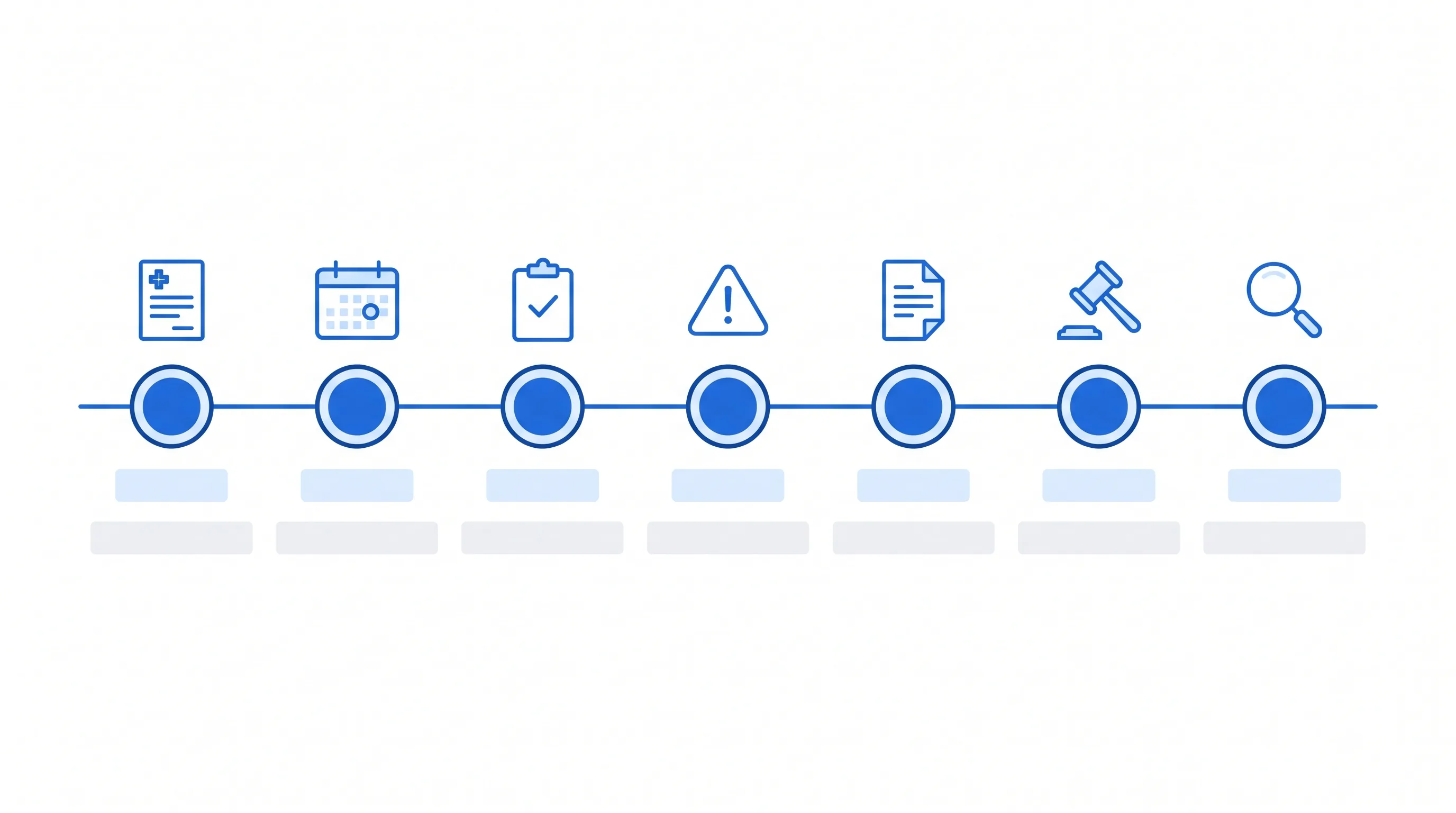
Visual chronology of the FDA actions that shaped the compounded semaglutide ban.
What "Essentially a Copy" Means
"Essentially a copy" is the legal hinge in the entire ban. A compounded product is essentially a copy of a commercially available drug if it has the same active ingredient, same route of administration, and same dosage form as Ozempic or Wegovy. Plain injectable semaglutide in a standard vial fits that definition cleanly. What does not fit: formulations that add a second active ingredient like cyanocobalamin, products in genuinely different dosage forms, or prescriptions written for a documented patient-specific clinical need the commercial product cannot meet.
Planning a Switch to Brand-Name Semaglutide?
Map your current dose onto an Ozempic or Wegovy titration schedule. Free pharmacokinetic visualizer, no signup.
Open Semaglutide Calculator503A vs 503B Pharmacies: What Is Still Legal Under the Ban
The compounded semaglutide ban hits 503A and 503B pharmacies on different timelines and with different scope. Knowing which type of pharmacy filled your prescription tells you which rules apply.

503A pharmacies serve individual patients; 503B outsourcing facilities supply larger batches under stricter FDA oversight.
Section 503A: Traditional Compounding Pharmacies
A 503A pharmacy is state-licensed, fills patient-specific prescriptions, and is not subject to FDA cGMP inspections. After the April 22, 2025 deadline, 503A pharmacies can no longer produce "essentially a copy" of Ozempic or Wegovy. They can still compound semaglutide when a patient has a documented clinical need that the brand-name product cannot meet, such as a documented allergy to an excipient in the commercial pen or a combination formulation with a second active ingredient. The prescription must be patient-specific and supported by clinical documentation.
Section 503B: Outsourcing Facilities
A 503B facility is voluntarily FDA-registered, subject to federal cGMP inspections, and can compound in larger batches that are not tied to specific patient prescriptions. After May 22, 2025, 503B facilities cannot compound any product that is essentially a copy of commercially available semaglutide. The April 30, 2026 proposal would go further: if finalized, it would remove semaglutide from the 503B bulks list entirely, eliminating the legal foundation for bulk semaglutide compounding under any circumstance. The 503B pathway, in short, is on a path to closure.
What Can Still Be Compounded
A handful of legal pathways remain open under the ban:
- Documented patient-specific clinical need. A documented allergy or a clinical reason the commercial pen cannot be used.
- Combination formulations. Semaglutide plus cyanocobalamin (B12), semaglutide plus L-carnitine, or other genuine combinations with a second active ingredient. These do not match the "essentially a copy" definition.
- Customized dosage forms. Genuinely different dosage forms tied to a documented medical need. Vials in the same form as the commercial pen do not qualify.
Availability depends on the pharmacy, state regulations, and how strictly each compounder interprets the FDA guidance. Some pharmacies pivoted to combination formulas immediately after April 22, 2025. Others stopped semaglutide altogether.
Novo Nordisk Litigation and Telehealth Market Impact
FDA action is only one half of the picture. Novo Nordisk, the patent holder for semaglutide, has pursued parallel private litigation against compounding pharmacies and telehealth platforms. That commercial pressure aligns with FDA enforcement and is part of why the market shifted as fast as it did.
Novo Nordisk's Enforcement Strategy
Novo Nordisk has filed lawsuits and trademark complaints against compounders, telehealth platforms, and weight-loss clinics that marketed compounded semaglutide at scale. The FDA's enforcement actions and Novo's private litigation reinforce each other. For patients, the visible result is the same: fewer platforms openly selling compounded semaglutide, and the ones that remain operate in narrower lanes.
Hims & Hers Exit in March 2026
In March 2026, Hims & Hers Health exited compounded GLP-1 marketing entirely. The proximate cause was Novo Nordisk's settlement-related pressure following the patent holder's enforcement push (Reuters and CNBC reported the settlement on March 9, 2026). The company now refers patients toward FDA-approved brand-name options. Hims is no longer a route to compounded semaglutide, and this article does not present it as one. When one of the largest telehealth platforms in the country pulls back under direct litigation pressure, the rest of the market notices.
Platforms Still Operating
Several telehealth platforms continue to offer compounded semaglutide products under the remaining legal pathways, mostly combination formulations or patient-specific prescriptions. The picture changes month to month. This article does not name specific platforms as "currently operating" because that information goes stale quickly. Verify current status directly with the platform, and ask them to put the legal basis in writing.
Related video
What the Compounded Semaglutide Ban Means If You Are Currently Using It
The answer depends on which pharmacy type filled your prescription, what the formulation is, and what your prescriber documented.
If Your Prescription Is From a 503A Pharmacy
Your pharmacy should have stopped producing new batches of plain "essentially a copy" semaglutide on April 22, 2025. If you are still receiving compounded semaglutide from a 503A pharmacy after that date, the pharmacy is either operating under a documented exception pathway (combination formulation or patient-specific clinical need) or is non-compliant. Ask the question directly: "What is the legal basis for this compounded semaglutide today?" A compliant pharmacy can answer in one sentence. A non-answer is a red flag.
If Your Prescription Is From a 503B Facility
The same logic applies, with the May 22, 2025 cutoff. A 503B facility filling prescriptions after that date must be using a combination formulation or a documented alternative basis. If the April 30, 2026 proposal becomes a final rule, the 503B pathway for semaglutide closes entirely and even combination formulations from 503B facilities would be at risk. Watch this space through summer 2026.
Transitioning to Brand-Name Ozempic or Wegovy
If you need to move from compounded semaglutide to a brand-name product, three things help: a dose-mapping plan, an insurance check, and a transition schedule that does not skip steps. The brand-name titration runs from 0.25 mg up to 2.0 mg for Ozempic or 2.4 mg for Wegovy, with four-week steps. See our semaglutide dosing guide for the full titration, and use the semaglutide calculator to plot your dose curve while you transition. If your prescriber wants you to keep compounded semaglutide under a combination formula, our compounded semaglutide guide covers sourcing and red flags.
Safety Note: Do Not Stop Cold
Stopping semaglutide abruptly is associated with rebound appetite and weight regain. The goal is a managed transition under your prescriber, not a cold stop. If you lose access to a compounded source on short notice, talk to your prescriber the same week about a bridge plan rather than tapering or pausing on your own. Some readers pivot to a different GLP-1 like compounded tirzepatide (which faced its own parallel ban timeline) or microdosing protocols. See our microdosing semaglutide page if your prescriber is considering a smaller maintenance approach.
The April 30, 2026 Proposal: What Happens Next in the Compounded Semaglutide Ban
On April 30, 2026, the FDA proposed excluding semaglutide, tirzepatide, and liraglutide from the 503B bulks list. The bulks list is the catalog of active ingredients that 503B outsourcing facilities are permitted to use in bulk compounding. If a drug sits on the list, 503B facilities can compound it under specific conditions. If a drug is removed from the list, the 503B bulk-compounding pathway is closed for that drug regardless of shortage status.
The proposal does two things at once. It points to the FDA's long-term direction: the agency wants GLP-1 receptor agonists supplied through the FDA-approved commercial channel rather than through compounding. It also opens a public comment period running through the end of June 2026, during which the public, pharmacies, manufacturers, and trade groups can submit input that may influence the final rule.
As of this writing, the proposal is not law. A final rule could land later in 2026, be modified during the comment period, or stall. If finalized, only 503A pharmacies serving documented patient-specific needs would have a legal pathway for compounded semaglutide, and only in narrow circumstances. Compare this approach with the broader switching landscape we cover in our Ozempic vs Wegovy guide and the semaglutide side effects guide, both of which become more relevant if you transition to a brand-name product.
Frequently Asked Questions
Is compounded semaglutide now illegal?
Compounded semaglutide is not fully illegal, but the legal pathways have narrowed sharply. After the FDA removed semaglutide from the shortage list in February 2025, compounding pharmacies can no longer produce "essentially a copy" of Ozempic or Wegovy. Compounding remains legal for documented patient-specific clinical needs and for combination formulations such as semaglutide with B12.
What was the FDA deadline to stop compounding semaglutide?
There were two deadlines: April 22, 2025 for 503A state-licensed pharmacies, and May 22, 2025 for 503B outsourcing facilities. Both applied to producing products that are essentially a copy of commercially available semaglutide. The 503A deadline followed a 60-day grace period after the FDA's February 2025 announcement. The 503B deadline of May 22 followed a longer, roughly 90-day runway.
What is the difference between a 503A and 503B compounding pharmacy?
A 503A pharmacy is a traditional state-licensed compounding pharmacy that fills individual patient prescriptions without FDA inspection. A 503B outsourcing facility is voluntarily FDA-registered, subject to federal cGMP inspections, and can compound larger batches. After the semaglutide ban deadlines, 503B facilities face stricter restrictions, and the April 30, 2026 FDA proposal would close the 503B pathway for semaglutide entirely.
Can compounding pharmacies still make semaglutide with B12?
Yes, in most cases. Semaglutide combined with cyanocobalamin (vitamin B12) or another active ingredient is not considered essentially a copy of Ozempic or Wegovy, so it may fall outside the compounding restrictions. Many pharmacies pivoted to combination formulas after the April 22, 2025 deadline. The regulatory status of these formulations continues to evolve.
Why did Hims stop selling compounded semaglutide?
Hims & Hers Health exited compounded GLP-1 marketing in March 2026 following Novo Nordisk's settlement-related pressure on the compounded GLP-1 telehealth segment (Reuters and CNBC reported the settlement on March 9, 2026). The decision also reflects broader FDA enforcement pressure on telehealth platforms that marketed compounded semaglutide at scale. Hims now directs patients toward FDA-approved brand-name options and is not a current source of compounded semaglutide.
What is the FDA's April 30, 2026 proposal about?
On April 30, 2026, the FDA proposed removing semaglutide, tirzepatide, and liraglutide from the 503B bulks list, the catalog of ingredients outsourcing facilities may use for bulk compounding. If finalized, this would eliminate 503B bulk compounding of these drugs entirely. A public comment period is open through the end of June 2026 before a final decision.
Is it safe to keep using compounded semaglutide from my current pharmacy?
Safety depends on your pharmacy's compliance and the product's formulation. The FDA has documented adverse event reports tied to compounded semaglutide products, with dosing errors as the primary concern (see Reference 1, the FDA compounders clarification page). If your pharmacy is operating under a legitimate legal pathway, the product may be safe, but verify with your prescriber which basis applies and check our compounded semaglutide guide for sourcing red flags.
Will compounded semaglutide come back if shortages return?
Under current law, if semaglutide were added back to the FDA's drug shortage list, compounding would again be permissible. However, the April 30, 2026 FDA proposal to remove semaglutide from the 503B bulks list would block the 503B pathway even in a future shortage. The 503A pathway for individual-patient compounding would likely remain. Novo Nordisk has stated that supply is now fully available nationwide.
What are my options if I can no longer access compounded semaglutide?
Transitioning to brand-name Ozempic for type 2 diabetes or Wegovy for weight management is the most direct route. Check the Novo Nordisk savings card, confirm insurance coverage, and ask your prescriber about combination semaglutide formulations still available through 503A pharmacies. Use the semaglutide calculator to map your transition dose curve.
Map Your Semaglutide Dose Curve
Plot any semaglutide schedule, brand-name or transition plan, with a free pharmacokinetic visualizer. No signup, no email required.
Open Free Semaglutide CalculatorReferences
- U.S. Food and Drug Administration. FDA Clarifies Policies for Compounders as National GLP-1 Supply Begins to Stabilize. Updated April 1, 2026. fda.gov/drugs/drug-alerts-and-statements (compounders clarification). (Primary source confirming February 2025 shortage list removal, 60-day grace period, April 22 and May 22 enforcement deadlines.)
- U.S. Food and Drug Administration. FDA Proposes to Exclude Semaglutide, Tirzepatide, and Liraglutide on 503B Bulks List. Press Announcement, April 30, 2026. fda.gov/news-events/press-announcements (503B bulks proposal). (Announces the April 30, 2026 proposal and the public comment window running through June 2026.)
- U.S. Food and Drug Administration. FDA Intends to Take Action Against Non-FDA-Approved GLP-1 Drugs. Press Announcement. fda.gov/news-events/press-announcements (non-FDA-approved GLP-1 action). (Outlines FDA enforcement intent and the basis for warning letters issued during 2025 and 2026.)
- Empower Pharmacy. The End of the Tirzepatide and Semaglutide Shortages. 2025. empowerpharmacy.com (end of shortages). (Industry source cross-referencing the April 22 and May 22, 2025 enforcement deadlines for 503A and 503B compounders.)
- Wilson Sonsini Goodrich & Rosati. FDA Sends Warning Letters to More Than 50 GLP-1 Compounders and Manufacturers. 2025. wsgr.com (warning letters summary). (Legal analysis tallying the 50+ warning letters issued during the 2025 enforcement wave.)
- Reuters. FDA Warns Telehealth Firms Over Compounded GLP-1 Marketing. 2026. reuters.com (telehealth warning wave). (Public reporting covering the FDA warning-letter wave to more than 30 telehealth companies marketing compounded GLP-1s during early 2026.)
- CNBC. Hims & Hers Settles With Novo Nordisk, Drops Compounded GLP-1 Marketing. March 9, 2026. cnbc.com (Hims Novo settlement). (Reporting on the March 2026 Novo Nordisk settlement that prompted Hims & Hers to exit compounded GLP-1 marketing.)
Medical Disclaimer
This article is for educational and informational purposes only. It does not constitute medical advice, a legal opinion, or a recommendation to start or stop any medication. Regulatory status of compounded GLP-1 products changes frequently. Verify current law and your pharmacy's compliance directly with the FDA and your prescriber. Do not discontinue or change any semaglutide prescription without consulting a qualified healthcare provider. GLP3Planner is an informational and calculation tool, not a medical or legal service.
Related Articles
Compounded Semaglutide Sourcing Guide
Cost ranges, red flags, salt-form pitfalls, and how to vet a 503A pharmacy under the current rules.
Semaglutide Dosing Guide
Full titration from 0.25 mg through Ozempic 2.0 mg and Wegovy 2.4 mg for readers transitioning to brand-name.
Microdosing Semaglutide
A smaller-maintenance approach some prescribers use under 503A pathways. Pharmacokinetic rationale and practical schedules.
Compounded Tirzepatide
Parallel regulatory timeline for tirzepatide, which faced its own October 2024 shortage resolution and matching enforcement.