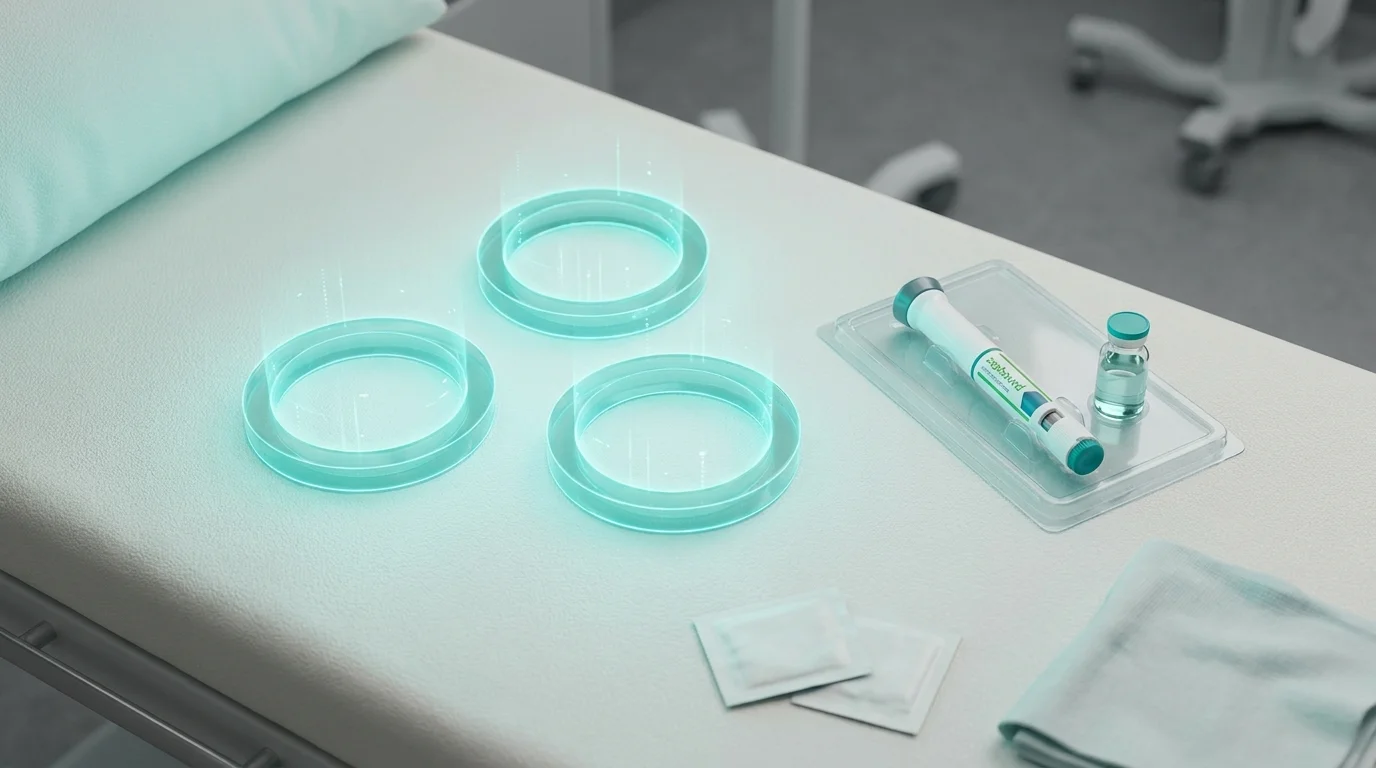
FDA-Approved Subcutaneous Injection Guide
Zepbound Injection Sites
Zepbound (tirzepatide) is a dual-agonist GLP-1 and GIP medication approved by the FDA in 2023 for chronic weight management. It is injected subcutaneously once weekly into one of three approved sites: the abdomen, the thigh, or the back of the upper arm. The site you choose and how consistently you rotate it each week are the two practical variables most likely to affect your comfort and results on Zepbound.
Key Takeaways
- 3 approved sites: Abdomen, front/outer thigh, and back of upper arm (FDA PI Section 2.4)
- Self-injection: Abdomen and thigh only. Back of upper arm requires another person to administer.
- Navel clearance: Stay at least 2 inches away from the belly button when injecting into the abdomen (per Lilly Instructions for Use)
- Rotate with every dose: FDA PI requires rotating injection sites each weekly injection
- Avoid damaged skin: Per Lilly IFU, do not inject into tender, bruised, scaly, hard, or damaged skin, including scars and moles
- No efficacy ranking: The FDA label does not state that any one approved site produces superior clinical outcomes
3
FDA-Approved Sites
Each dose
Rotate Sites
2 inches
From Navel
The 3 FDA-Approved Zepbound Injection Sites
The FDA Prescribing Information for Zepbound (Section 2.4) states: "Inject ZEPBOUND subcutaneously in the abdomen, thigh, or another person should inject in the back of the upper arm." Those are the only three approved anatomical locations. Here is how each one works.

Abdomen (Most Common Choice)
The abdomen is the most common site for self-injection. You inject into the subcutaneous fat layer of the stomach area, not into muscle. The usable zone covers the soft tissue on the left and right sides of the navel, below the waistline, and toward the lower abdomen.
The Lilly Instructions for Use specify staying at least 2 inches from the belly button. The tissue directly around the navel is denser, which can make the injection more uncomfortable and affect how evenly the medication absorbs. A practical check: place two fingers side by side at your navel and inject outside that boundary.
Practical tip: Many people find the lower abdomen, slightly to either side, is the most accessible and comfortable area. The skin there tends to have enough subcutaneous fat to allow a clean pinch if needed.
Thigh (Easiest for Self-Injection)
The front and outer thigh is a reliable alternative to the abdomen, especially when abdominal skin is tender or if you have recently used that area. Inject into the subcutaneous tissue of the middle third of the thigh, roughly midway between the knee and hip, on the front or outer side.
Some people find the thigh easier to visualize and access, particularly while seated. Avoid the inner thigh, which has less subcutaneous fat and more sensitive tissue.
Back of Upper Arm (Caregiver Only)
Important: The back of the upper arm is only approved when another person administers the injection. The FDA PI makes this explicit: another person should inject in this location. Self-injection into the upper arm is not recommended per the prescribing information.
When a caregiver administers the dose, the back of the upper arm (the posterior tricep area) is a valid third option. The site is difficult to reach and control correctly when self-injecting, which is why the labeling restricts it.
How to Rotate Zepbound Injection Sites (and Why It Matters)
The FDA PI for Zepbound states directly: "Rotate injection sites with each dose." That is not optional guidance. Repeated injection into the same spot causes the subcutaneous fat tissue to thicken and become fibrous, a condition called lipohypertrophy. Once that happens, absorption from that spot becomes inconsistent, making your medication less predictable.
A Simple Rotation Schedule
You do not need a rigid system, but having a consistent pattern makes it easy to remember where you last injected. A straightforward 4-week cycle works well for most people:

Week 1
Left abdomen
Week 2
Right abdomen
Week 3
Left thigh
Week 4
Right thigh
Repeat the cycle from Week 1 after Week 4. If a caregiver administers your dose, the back of either upper arm can substitute for any week.
What Happens If You Do Not Rotate?
Injecting into the same location every week causes lipohypertrophy: thickened, lumpy subcutaneous fat from repeated tissue trauma. The affected area may feel firm or rubbery under the skin. Beyond the cosmetic concern, lipohypertrophic tissue absorbs medication erratically. People who develop it sometimes see swings in their weekly response to Zepbound that have nothing to do with the medication itself.
If you notice a firm raised area at a previous injection site, avoid that spot until it resolves and mention it to your prescriber at your next appointment.
What to Avoid When Choosing a Zepbound Injection Site
Beyond choosing the right region of the body, you also need to choose clean, healthy skin within that region. The Lilly Instructions for Use provide explicit guidance on what to avoid.
Skin Conditions to Skip
Per the Lilly Instructions for Use, do not inject into skin that is:
- Tender or sore to the touch
- Bruised from a recent injury or previous injection
- Scaly or hard, including thickened or calloused skin
- Damaged in any way
- Scarred tissue from surgery, injury, or stretch marks
- Over moles or other skin lesions
These conditions impair absorption and raise the risk of discomfort or local infection at the injection site.
The Navel (Belly Button) Zone
Stay at least 2 inches away from your belly button when injecting into the abdomen. The Lilly Instructions for Use identify this as a zone to avoid. The connective tissue near the navel is denser than the surrounding soft tissue, and injecting too close can cause more discomfort and may affect how consistently the medication absorbs.
Simple check: Place two fingers flat against your navel. The space they cover is the clearance zone. Inject outside it.
Does the Injection Site Affect How Well Zepbound Works?
Short answer: the FDA-approved prescribing information does not rank one site above another for clinical outcomes. All three approved locations are considered effective delivery routes for subcutaneous Zepbound.
Claims about specific percentage differences in bioavailability between the abdomen, thigh, and upper arm do circulate in patient forums, but these figures have not been confirmed by a published Tier 1 clinical study that is accessible at the time of this writing. The FDA PI does not differentiate between sites for efficacy purposes.
Consistency Matters More Than Location
Rotating correctly and injecting on schedule each week are the variables within your control that most directly affect how well Zepbound works. Someone who injects into healthy skin at a different site each week, on their scheduled day, gets more consistent drug exposure than someone injecting into the same lipohypertrophic spot repeatedly.
Use the Zepbound calculator to visualize your weekly drug levels based on your dose and schedule, and log your injection sites so the rotation pattern stays consistent.
Track Your Zepbound Injection Sites
Log each weekly dose and site with the free GLP3Planner calculator. Visualize your tirzepatide drug levels and stay on schedule.
Zepbound Injection Site Reactions: What's Normal, What's Not
Minor local reactions are common with subcutaneous injections. Most clear up on their own within a day or two.
Usually normal
- Small red bump or raised area
- Mild itching at the site
- Minor bruising from the needle
- Brief stinging or pinching sensation
Contact your provider
- Spreading redness or warmth
- Pus or discharge at the site
- Swelling that grows over 24 hours
- Signs of allergic reaction (hives, swelling away from site)
For a full breakdown of Zepbound side effects beyond the injection site, see the Zepbound side effects and injection site reactions guide.
How to Inject Zepbound: Video Demonstration
This step-by-step video from Drugs.com walks through the full Zepbound injection process, including site selection, positioning, and technique. Over 600,000 views.
Video: Drugs.com. "How to Inject Zepbound: Step-by-step Demonstration." Published April 2025.
Track Your Injection Sites with the Zepbound Calculator
GLP3Planner's free Zepbound calculator lets you log each weekly dose, track which site you used, and visualize how tirzepatide builds up in your system using pharmacokinetic modeling. If you miss a dose or need to check when your next injection is due, the calculator handles it.
Free Zepbound Dose Tracker
See your tirzepatide levels, plan your schedule, and log injection sites. No signup required.
Open Free Calculator →Zepbound Injection Sites: Frequently Asked Questions
Where should I inject Zepbound?
Zepbound is approved for subcutaneous injection in three locations: the abdomen, the front or outer thigh, or the back of the upper arm. The abdomen and thigh are the two sites for self-injection. The back of the upper arm is only approved when another person administers the shot. Rotate among sites with every weekly dose.
How far from my belly button should I inject Zepbound?
Inject at least 2 inches away from your belly button, per the Lilly Instructions for Use. Staying outside this zone avoids the denser tissue around the navel, which can increase discomfort. A practical guide: two fingers placed flat against the navel covers roughly the clearance zone; inject outside it.
Does it matter where you inject Zepbound?
The FDA-approved prescribing information does not rank one injection site as clinically superior to another. All three approved sites are considered effective delivery routes for subcutaneous Zepbound. What matters most is rotating sites with each dose and avoiding damaged or compromised skin, which affects absorption consistency.
Can I self-inject Zepbound into my upper arm?
No. The FDA prescribing information states that the back of the upper arm is only approved for injection when another person administers the dose. For self-injection, use only the abdomen or front or outer thigh. The upper arm is difficult to reach and control correctly when self-administering.
How do I rotate Zepbound injection sites?
Rotate among sites with each weekly dose to prevent lipohypertrophy. A simple 4-week cycle: left abdomen, right abdomen, left thigh, right thigh, then repeat. Avoid returning to the exact same small spot for at least 4 weeks, and never inject into the same spot two weeks running.
What skin should I avoid when injecting Zepbound?
Per the Lilly Instructions for Use, do not inject into skin that is tender, bruised, scaly, hard, or damaged. Scars and moles should also be avoided. These conditions impair drug absorption and raise the risk of discomfort or infection at the site. Choose clean, intact subcutaneous tissue within an approved zone.
Is the abdomen better than the thigh for Zepbound absorption?
The FDA prescribing information does not state that any approved site produces superior clinical outcomes. Claims about percentage differences in bioavailability between sites appear in patient forums but have not been confirmed by a published Tier 1 clinical study at the time of writing. Consistent rotation and on-schedule dosing are the evidence-based priorities.
What happens if I inject Zepbound too close to my belly button?
Injecting within 2 inches of the belly button is not recommended per the Lilly Instructions for Use. The tissue near the navel is denser, which can increase discomfort and affect how evenly the medication is absorbed. An occasional lapse is unlikely to cause serious harm, but maintaining 2-inch clearance is the correct practice.
What are common Zepbound injection mistakes?
The most common mistakes are: injecting the same spot each week without rotating, choosing compromised skin such as bruised or scarred areas, injecting within 2 inches of the navel, and attempting to self-inject into the upper arm. Following the Lilly Instructions for Use for your specific Zepbound format (pen or vial) addresses all of these.
Can I inject Zepbound in my stomach?
Yes. The abdomen (stomach area) is one of the three FDA-approved injection sites for Zepbound. Inject into the subcutaneous tissue at least 2 inches from the belly button. Avoid the waistline and any area of damaged, tender, or scarred skin. The abdomen is the most commonly used site for self-injection.
References
- U.S. Food and Drug Administration. ZEPBOUND (tirzepatide) injection, for subcutaneous use. Full Prescribing Information, Section 2.4 Important Administration Instructions. Eli Lilly and Company; 2023. Available via OpenFDA: api.fda.gov/drug/label.json
- Eli Lilly and Company. ZEPBOUND Single-Dose Vial Instructions for Use. 2023. pi.lilly.com/us/zepbound-vial-us-ifu.pdf
- Eli Lilly and Company. ZEPBOUND Single-Dose Pen Instructions for Use. 2023. pi.lilly.com/us/zepbound-pen-us-ifu.pdf
- Jastreboff AM, Aronne LJ, Ahmad NN, et al. Tirzepatide Once Weekly for the Treatment of Obesity (SURMOUNT-1). New England Journal of Medicine. 2022;387(3):205-216. doi:10.1056/NEJMoa2206038
Medical Disclaimer
This article is for educational purposes only and does not constitute medical advice. Zepbound (tirzepatide) is an FDA-approved prescription medication. Do not start, stop, or change your dose without guidance from a licensed clinician. Injection technique guidance here is drawn from publicly available FDA prescribing information and Lilly Instructions for Use; always defer to your prescriber and the package insert that comes with your medication. Results from clinical trials represent group averages and individual results vary.
Track Your Zepbound Doses. Free.
Free pharmacokinetic calculator for Zepbound and tirzepatide. No signup required.
Related Articles
Tirzepatide Complete Guide
Everything about Mounjaro and Zepbound.
Zepbound Side Effects Guide
Zepbound side effects and injection site reactions.
Zepbound Dosing Guide
Zepbound dosing guide and titration schedule from 2.5mg to 15mg.
Zepbound Dosage Chart
Zepbound dosage chart at every titration step.